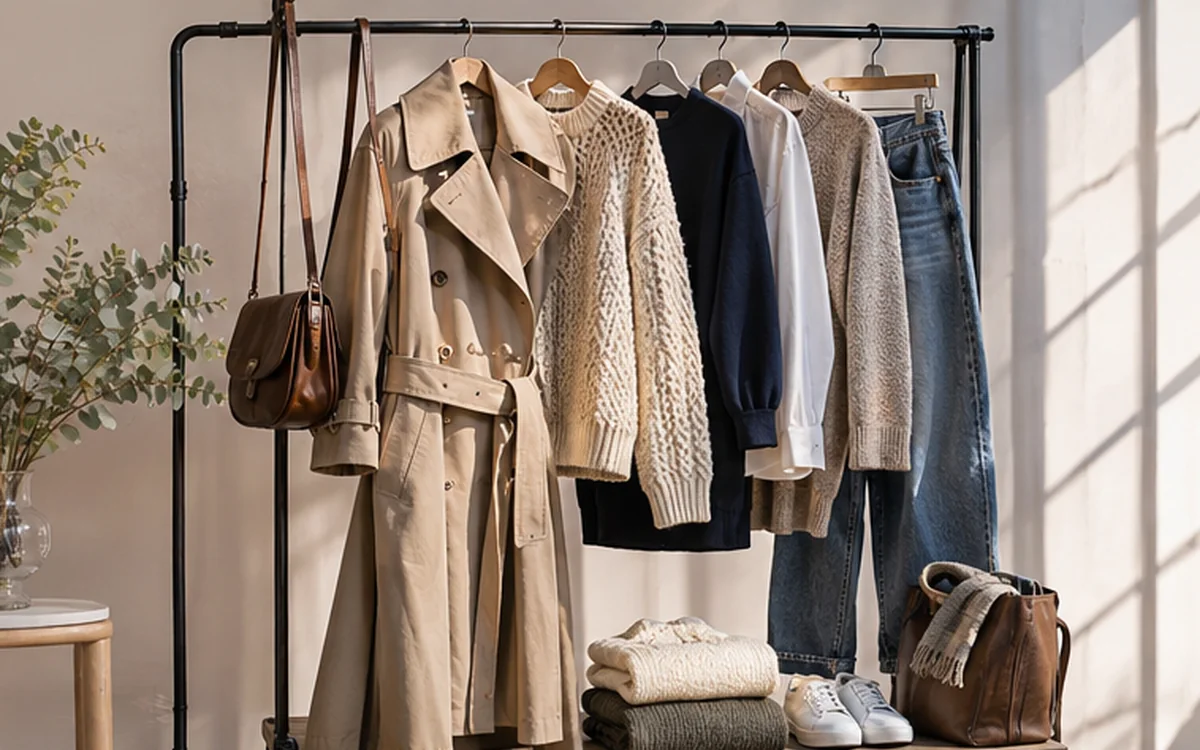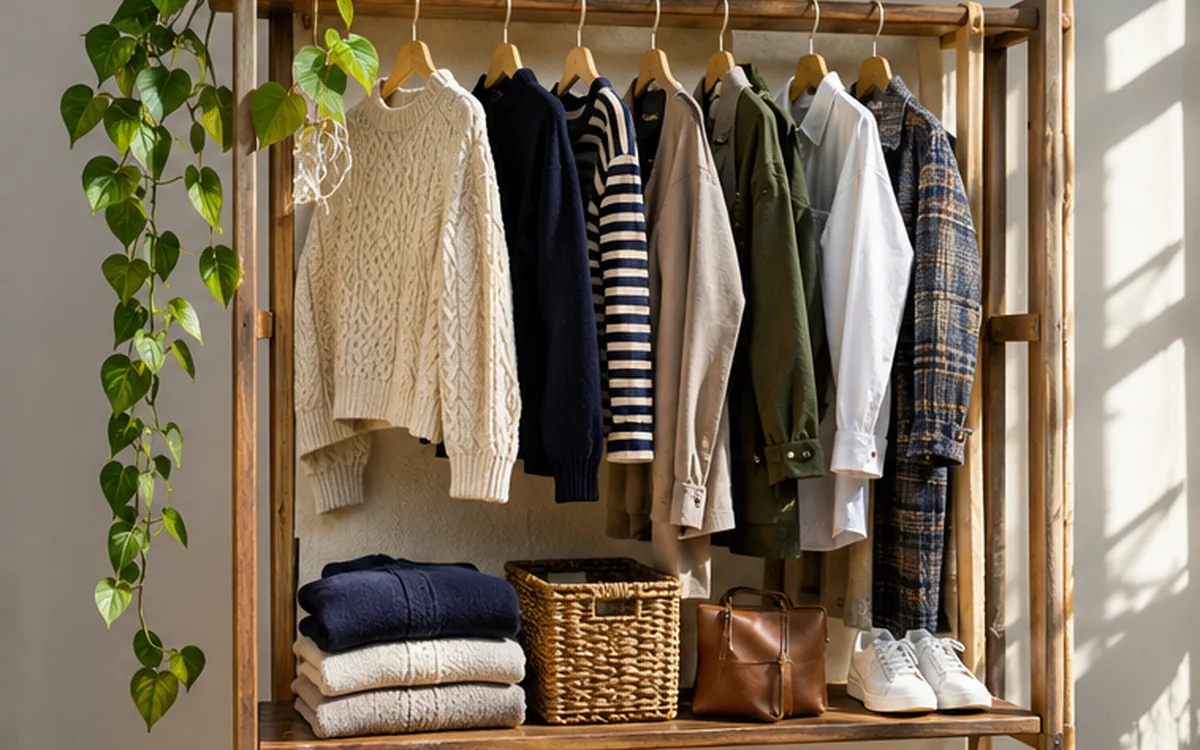
A wardrobe can feel more interesting without becoming larger. One of the simplest ways to change an outfit is to work with colour and texture, combining familiar pieces so they look different from one day to the next.
Find the colours you already wear most
Look at your favourite trousers, coats, tops and shoes. Which shades appear repeatedly? Those colours make a useful starting point because you already know you enjoy them. Navy, charcoal, cream and brown are common foundations, but a wardrobe can also centre on greens, reds, blues or colourful prints.
Use a simple three-part outfit
Try building an outfit from a foundation colour, a second supporting colour and one accent. For example, charcoal trousers, a cream knit and an olive jacket create a quiet palette. Blue denim, a white shirt and a burgundy scarf provide a different effect.
This is a flexible technique, not a rule. Some outfits look great with one shade from head to toe, while others work because several colours contrast.
Understand the role of texture
Texture changes the way light falls on clothing and how an outfit feels. Smooth cotton, ribbed knitwear, denim and brushed wool can give a simple colour palette variety. Consider how fabrics behave when layered and whether they feel comfortable against your skin.
Five combinations to try
- Navy and cream: A navy jacket over a cream knit, combined with denim or trousers.
- Olive and charcoal: Practical outerwear with simple dark basics.
- Brown and pale blue: A brown cardigan with a light shirt and relaxed trousers.
- Black and one bright accent: A mostly dark outfit with a colourful scarf or bag.
- Denim and textured knit: Familiar fabric combinations that can feel relaxed or polished.
Consider contrast and proportions
A thick jumper with lightweight trousers may feel visually and physically different from the same jumper worn with substantial denim. If an outfit feels too heavy or too flat, change a single layer first rather than replacing everything.
What about patterns?
Patterns can be introduced gradually. A striped shirt under a plain cardigan is an easy starting point. If you enjoy bolder combinations, use a repeated colour to connect the garments or simply wear the patterns that make you happy.
Make colours work across seasons
There is no need to reserve particular colours for a season. In warmer months, you might choose lighter fabrics in your preferred palette. In colder months, the same shades can appear in knitwear and outerwear. Fabric weight and comfort matter more than an arbitrary seasonal rule.
Buying colour thoughtfully
Before purchasing something in a new shade, hold it near clothes you already own or compare accurate product images where possible. Natural light can help when assessing colour in person. Online pictures may vary between screens, so check returns if the exact shade is important.
Your wardrobe should feel like a collection of pieces that belong to you. Colour and texture are tools for discovery, not tests to pass.