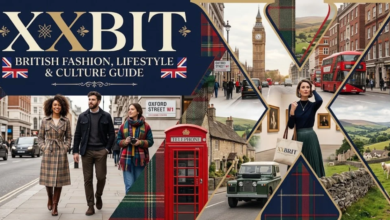
The word XXBrit has started appearing online around discussions of British identity, fashion, lifestyle, heritage, and digital culture. Unlike a traditional dictionary term, it does not have one universally accepted definition. It is better understood as an emerging online label that can be used to explore the combination of classic British influences and the ways younger, digitally connected audiences interpret British culture today.
That distinction matters. Britain cannot be reduced to trench coats, afternoon tea, London landmarks, or a particular accent. Modern British identity includes England, Scotland, Wales, and Northern Ireland, along with numerous regional and multicultural influences. Looking at XXBrit through that wider perspective provides a more useful introduction to the traditions, fashion movements, creative industries, and everyday experiences associated with contemporary life in the United Kingdom.
What Does XXBrit Mean?
XXBrit can be understood as an informal digital label connected with modern British style and cultural identity rather than an officially recognized cultural movement. Public online descriptions of similar terms often connect them with fashion, creativity, youth culture, heritage, and digital storytelling. That makes the term useful as a starting point, but readers should avoid treating every website’s interpretation as an established definition.
A better way to understand the concept is to view it as the intersection between recognizable British traditions and modern cultural expression. Historic tailoring might sit beside streetwear. Traditional architecture may appear beside contemporary design. Regional music can influence global pop culture. Under this interpretation, XXBrit becomes less about creating a rigid definition of “Britishness” and more about discovering how British identity continues to evolve.
Some themes commonly associated with this broader idea include:
- British fashion and tailoring
- London street style
- Music and youth subcultures
- Art and graphic design
- Regional traditions
- British heritage
- Contemporary lifestyle
- Digital creators
- Film and television
- Multicultural British identity
| Traditional Influence | Modern Expression |
|---|---|
| Formal tailoring | Relaxed and oversized tailoring |
| Tartan and heritage textiles | Contemporary patterned streetwear |
| Trench coats | Minimal everyday outerwear |
| Classic leather footwear | Boots paired with casual clothing |
| Formal British dress | High-low fashion mixing |
| Regional traditions | Digital cultural storytelling |
British Style: Where Heritage Meets Modern Fashion
British style has never been limited to one aesthetic. Formal tailoring, practical outerwear, countryside clothing, youth movements, punk, mod fashion, and experimental designer clothing have all influenced perceptions of British dress. That diversity explains why British fashion can simultaneously appear polished and rebellious. A carefully tailored jacket and an intentionally unconventional streetwear outfit can both belong within the much broader story of British style.
Contemporary fashion continues that tension between heritage and experimentation. London remains internationally important within the fashion industry, and the British Fashion Council organizes London Fashion Week as a platform for designers and fashion businesses. Rather than simply repeating historical looks, modern designers frequently reinterpret recognizable materials, silhouettes, craftsmanship, and cultural references for new audiences.
Elements Associated With British Style
Several visual elements can help explain the aesthetic:
- Structured coats and jackets
- Tailored trousers
- Knitwear
- Checks and tartan-inspired patterns
- Leather shoes and boots
- Layered outfits
- Neutral basics
- Vintage clothing
- Streetwear influences
- Experimental accessories
There is no requirement to wear all these elements together. In fact, modern UK fashion often works because people mix different influences instead of following one rigid formula.
British Culture Beyond Clothing
Fashion represents only one part of British culture. Literature, theater, music, architecture, television, comedy, sports, food, visual art, and regional traditions all contribute to Britain’s cultural identity. Even within these categories, there is considerable variation. A cultural experience in Glasgow may look very different from one in London, Cardiff, Belfast, Manchester, Liverpool, Birmingham, or a smaller rural community.
That regional diversity is important when interpreting XXBrit. Describing every British cultural experience as essentially English or London-based creates an incomplete picture. The United Kingdom contains several national and regional identities with their own histories, traditions, accents, creative scenes, and social customs. Modern British culture has also been shaped by migration and interaction with communities from around the world, making it continually changing rather than culturally static.
A simple way to understand the range is:
| Cultural Area | Examples of Influence |
|---|---|
| Fashion | Tailoring, punk, streetwear, designer fashion |
| Music | Rock, electronic music, grime, indie and pop |
| Literature | Novels, poetry, drama and contemporary writing |
| Food | Regional dishes and multicultural cuisine |
| Design | Architecture, graphics, interiors and product design |
| Entertainment | Film, television, comedy and theater |
| Lifestyle | Pubs, cafés, markets, festivals and local traditions |
British culture therefore works better as a collection of overlapping identities than as a checklist of stereotypes.
How XXBrit Fits Modern Digital Identity
Digital platforms have changed how people discover culture. Someone in the United States no longer needs to visit Britain before encountering London streetwear, Scottish landscapes, British musicians, UK television, regional slang, interior design, or independent fashion labels. Images and videos allow cultural references to circulate internationally within hours, giving British aesthetics an audience far beyond the United Kingdom.
That digital environment helps explain why a label such as XXBrit can develop multiple meanings. Online communities frequently create shorthand terms for aesthetics, identities, or creative trends before those terms develop stable definitions. The result can be useful but also confusing. Rather than assuming every post carrying the label represents authentic British culture, readers should consider the creator, location, context, and original source behind what they are viewing.
When evaluating British cultural content online, check:
- Is the creator explaining where the tradition or style originated?
- Does the content distinguish Britain from England?
- Are regional differences acknowledged?
- Are historical claims supported by reliable sources?
- Is the content showing real culture or simply repeating stereotypes?
- Does it separate personal aesthetic interpretation from established fact?
This approach makes cultural exploration more interesting because it replaces assumptions with context.
How to Explore British Style and Culture Authentically
The easiest mistake is beginning with stereotypes and then looking for evidence that confirms them. A better method starts with variety. Explore several cities and regions, compare historical and contemporary fashion, listen to different music scenes, study British designers, and read publications or institutions connected directly with the subject. This helps reveal how different generations and communities have shaped what people now recognize as British culture.
You can also treat XXBrit as a discovery keyword rather than a strict definition. Follow it into related topics such as British street style, UK fashion history, contemporary British designers, regional traditions, British music culture, London creative communities, and modern UK identity. The broader your sources become, the less likely you are to mistake a temporary internet aesthetic for an accurate representation of an entire country.
A useful exploration process is:
- Start with history. Learn where recognizable styles and traditions originated.
- Compare regions. Look beyond London and England.
- Study modern creators. Explore contemporary designers, musicians, artists, and photographers.
- Compare old and new. Notice how heritage elements are being reinterpreted.
- Check original sources. Verify unusual claims before repeating them.
- Explore everyday culture. Look beyond fashion into food, entertainment, language, design, and community life.
The goal is not to decide whether something is “British enough.” It is to understand where it came from and how its meaning has changed.
Frequently Asked Questions About XXBrit
What does XXBrit mean?
XXBrit is best treated as an informal online label connected with British style, culture, identity, and contemporary creativity. There is currently no widely recognized official definition that applies to every use of the term.
Is XXBrit a fashion brand?
The keyword should not automatically be described as a specific fashion brand without verifying the particular website, account, or organization using it. Online uses of similar terms appear in several different contexts.
Is XXBrit the same as British culture?
No. British culture is much broader. XXBrit can function as a digital lens for exploring parts of British fashion and culture, but it should not be presented as a replacement for British cultural identity itself.
What defines modern British style?
Modern British style combines many influences, including tailoring, heritage clothing, streetwear, vintage fashion, music subcultures, designer experimentation, practical clothing, and individual expression.
Why is British fashion influential?
Britain combines long traditions of craftsmanship and tailoring with influential youth movements and contemporary design. London also maintains a major international fashion platform through London Fashion Week and its designer community.
Conclusion
XXBrit is most useful when approached as an entry point into a much larger subject. It can connect readers with British fashion, cultural identity, creative expression, heritage, digital communities, and contemporary lifestyle. What it should not become is another simplified label suggesting that one outfit, city, accent, or tradition represents everyone living across the United Kingdom.
For readers discovering XXBrit, the most rewarding approach is therefore exploration rather than rigid definition. Look at traditional influences alongside modern creativity, compare regions, verify historical claims, and follow the people actually producing British fashion, music, art, design, and cultural work. That provides a richer and more accurate picture of British style and culture than stereotypes or loosely sourced internet definitions ever could.